
Beyond Awareness: Sanofi's Journey to a Neuroinclusive Workplace
Did you know that over half of Gen Z identifies as neurodivergent? Yet most companies’ offices are still built around a single dominant cognitive profile.
Sanofi's approach to neuroinclusive workplace design, from quiet zones to accessibility lounges, is built to support the full spectrum of cognitive and working styles.
For four decades, Marie-Gwénaëlle Chuit navigated environments that weren't designed for how she thinks and senses. Noisy, high-stimulation spaces were overwhelming, and societal expectations around focus and communication never quite fit how she experienced workplaces. She would retreat to the quietest corner of the office, only for colleagues to find her and ask why she wasn't sitting with the team.
Then, around 10 years ago, her daughter Alice was assessed as having high intellectual potential, with an intelligence quotient of 150. That prompted Chuit to explore her own cognitive profile and read everything she could about neurodivergence. "I could tick all the boxes," she recalls. "It shed a light on my whole life. Nothing was wrong with me. I was just wired differently. Society simply wasn't built with people like me in mind."
Today, Chuit is Sanofi's Inclusion Lead for France, where approximately 20,000 of Sanofi’s employees are based. She is also the co-founder of AWARE, the company's cognitive diversity employee business resource group, which has grown to more than 800 members worldwide since she launched it during the pandemic in May 2020. Her lived experience as a neurodivergent person shapes how she experiences and navigates the workplace.
"I spent years wondering why I was different," she says. "Now I channel that experience into making sure everyone at Sanofi feels they belong and can perform at their best."
A changing workforce
The shift Sanofi is responding to is substantial. According to Deloitte, an estimated 15% to 20% of the global population is neurodivergent, a figure encompassing individuals with autism, ADHD, dyslexia, dyspraxia and other forms of neurodivergence that influence how people engage with information, communication, and work environments. Among early talent, the proportion is higher still. Research from 2023 by ZenBusiness suggests that over half of Generation Z employees (53%) identify as neurodivergent, and by 2030, this cohort will make up nearly a third of the workforce.
Yet most workplaces are still designed as if everyone's brain works the same way. The City & Guilds Neurodiversity Index 2025 found that 41% of neurodivergent employees navigate workplace barriers on most days, while over half have taken time off due to their neurodivergence, citing burnout, conflict and poor mental health support. With global talent shortages intensifying, organizations that fail to accommodate different thinking styles risk losing access to exceptional candidates: research by Understood.org found that 51% of neurodivergent Gen Z workers would leave a company that isn't neuroinclusive.

For Sanofi, inclusion is both a human responsibility and a business imperative. "We cannot pretend to save lives if we don't care about our people," says Ömer Döne, Sanofi's Global Head of Sustainable Workplace. "Having an accessible and comfortable workplace isn't a luxury. It's about making sure people can perform at their best."
Five years ago, prior to implementing an Inclusion strategy, Sanofi's approach to accessibility was primarily compliance-focused. Neurodiversity was "largely absent from workplace experience discussions," Döne admits. Sanofi has since reframed accessibility as a driver of innovation, performance, and belonging, setting bold ambitions to exceed regulatory expectations.
Working with external expert organizations, Sanofi developed comprehensive accessibility standards spanning five themes: physical accessibility, health and safety, informational design, sensorial factors (acoustics, lighting, temperature, materials) and organizational culture. The framework now encompasses more than 200 requirements and new categories covering labs, manufacturing and warehousing areas.
By the end of 2025, the company had achieved its initial accessibility objectives. In practice, this means features such as step-free entrances, adjustable lighting, quiet zones, digital accessibility tools, inclusive wayfinding, and workplace adjustment processes are now embedded across offices, labs and manufacturing facilities worldwide. The next phase continues to raise the bar, with Sanofi working toward even higher accessibility standards across all sites by 2030.
Chuit has witnessed the transformation at close quarters. ”We've evolved to focus on strengths and what neurodivergent employees can bring. Our inclusion strategy reaches everyone."
Designing for the full spectrum
Kay Sargent has spent four decades studying how physical environments shape human performance. As Director of Thought Leadership for Interiors at global architecture firm HOK, she has observed a fundamental shift in how organizations approach workspace design.
"We have to think about whether we are creating spaces that truly enable people to do their best work." Sargent explains.
Sargent's research conducted with partners including Tarkett, Genius Within, Stanford, and the University of Cambridge, and drawing on about six studies and over 1,000 survey responses, reveals that neurodivergent workers show heightened sensitivity to visual movement, colors, patterns and tactile experiences, and report greater extremes in their responses to environmental factors. When those experiences turn negative, they are more likely to want to escape the office altogether.
The solution isn't to design one "ideal" workspace, but to offer a range of spaces matched to tasks and sensory profiles, while providing options, choice and some degree of control.
This is the approach Sanofi has adopted. "Instead of assuming one 'ideal' workspace, we intentionally create areas ranging from very quiet, low-stimulation zones to more vibrant, energetic spaces," Döne explains. "By giving people choice and embedding these concepts consistently, we enable neurodivergent employees – and in fact all employees – to work in conditions that support both performance and wellbeing. It's not just about making work possible; it's about making it optimal, comfortable, and safe for everyone."
For Chuit, that means avoiding the crowded restaurant at peak hours and seeking out rest rooms when migraines strike, while using the flexibility of remote working to recharge at home two days a week.
A living lab
One of Sanofi's more distinctive innovations is the Accessibility Lounge, a dedicated space where employees can explore tools and solutions that support different ways of working such as noise-cancelling headsets, fidget tools, alternative lighting, and keyboards.
“It allows people to feel less guilty about needing this kind of equipment,” Chuit says. "It's there, so let's use it." The approach normalizes the discussion around accessibility and removes stigma around workplace adjustments, making accessibility a mainstream topic rather than something employees feel they need to justify or hide.
Since the pilot launched in Gentilly in April 2025, the Lounge has supported around 200 people, with a smaller mobile "pop-up lounge" extending its reach across offices. Two additional lounges are planned for Morristown and Hyderabad in 2026, alongside 20 pop-up installations across global sites.
For Dr Vijeta Tiwari, Sanofi's commitment to inclusion is personal. The Bengaluru-based Access Lead for Asia in Sanofi's Global Health Unit isn't neurodivergent herself, but her perspective was shaped by growing up alongside her younger brother, Atul, who was diagnosed with Duchenne Muscular Dystrophy at age five. Schools in India during the 1990s lacked ramps and basic accommodations. Atul was expelled at seven because he could no longer walk. He passed away at 21.
Those experiences drew Tiwari to healthcare and eventually to Ability+, one of Sanofi's global employee business resource groups focused on disability inclusion. "Inclusion supports not just individuals, but also the families who walk every step of the journey with them," she says. "Sanofi has given me the platform to share my family's experience, and I've realized that's my strength."

Research published in Harvard Business Review suggests neurodiverse teams can be 30% more productive. Further, the City & Guilds Neurodiversity Index 2025 found that 89% of organizations that adopted neuroinclusive practices reported better employee morale and engagement across their entire workforce.
Sargent believes the terminology itself is evolving. "If you're talking about such a high percentage of people who are potentially neurodivergent, that is no longer a neurominority," she observes. "We are all neurodiverse. We all think differently, we just aren’t all neurodivergent. For those who are, sensory triggers in the built environment can be debilitating, not just annoying.”
Achieving Sanofi accessibility standard compliance for 100% of sites was a milestone for Sanofi, not a finish line. The company has entered Phase 2 of its inclusion strategy, "Belong. Beyond Boundaries." This next phase is about leveraging inclusion to unlock true belonging. From a workplace perspective, that means raising our standards and reaching excellence in accessibility in the workplace,” says Döne. In parallel, Sanofi is accelerating the rollout of WELL Certification, one of the most rigorous global standards for measuring and improving how buildings support human health and wellbeing through factors such as air quality, water, lighting, thermal comfort, and mental health. Nine Sanofi sites are already certified at higher levels (Platinum & Gold), with five more expected this year.
For Döne, the connection between WELL principles and neuroinclusion is direct. "WELL principles enhance cognitive and sensory comfort through optimized lighting, thermal comfort, acoustics, air quality, and thoughtfully designed spaces for mental wellbeing," he explains. "By embedding these consistently across both new and existing sites, we ensure that neuroinclusive design becomes a natural, everyday part of the employee experience."
Meanwhile, Chuit is leading the development of a neurodiversity guide for managers in France, with plans to translate and share it globally. And AWARE, the network she co-founded almost six years ago with Stéphane Perrin-Fayolle, continues to grow.
"Our goal is not just accessible workplaces," Döne concludes, "but environments where everyone can belong, perform, and grow, without boundaries."
For more information about Sanofi's commitment to workplace accessibility and employee wellbeing explore Sanofi's workplace experience stories.
Where will you go next?
Learn from experts. Leverage technology. Use your skills to make a difference. It all starts here.
Experience possibility
-
Our culture & values
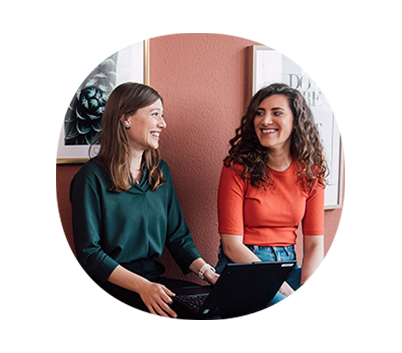
We're the first in Pharma to have a DE&I board. We also have Employee Business Resource Groups that create spaces for every Sanofian to be heard. Your voice matters – use it to shape our future.
-
Why Sanofi
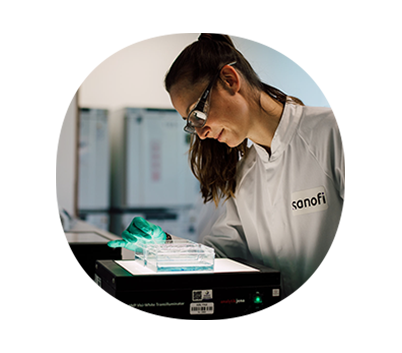
Get access to the tools, training, and support to reach your goals. By fulfilling your potential, you’ll help us achieve our aim of halving the time from discovery to therapy.
-

Build a career with purpose
Bring your passion to your role and impact millions of people around the world. You're in the driver's seat – just set your goals, and we'll provide the training and support that will get you there.
Join our
talent community
What could we achieve together? Every Sanofian works on projects that truly make a difference to people’s lives.
Sign up today and discover our latest opportunities as soon as they’re available.